Tuesday, August 4, 2015

When the neighbourhood shop knows you well...

Trips to the neighbourhood toy shop are always so eventful with me trying hard to dissuade my six year-old from wanting to buy everything he sees. My son knows the shop too well and before I know it, he is in the store basement where all his favourite cars and trains are tucked in. The sales girls know him well and they are only too happy to show him the 'latest'. Dragging him out of the shop is not an easy task. But this is not why I will remember this particular trip to the shop.

I recall it because the shop-keeper remembered that I do not take the plastic bags the shop hands out to its customers. So, when the girl at the bill desk tried to stuff my son's loot in the red-and-white shopping bag, the owner intervened and said, "Madam doesn't like plastic bags." I don't know if that was meant as a compliment, but I sure took it as one. Full marks to the shop for remembering its customers and her shopping habits.

There are a few things that irk a nature lover and one such is the ubiquitous plastic bag. Yes, it is still ubiquitous, despite efforts by retailers to prevent customers from demanding one. And there are other things that make a green lover see red... 

My story in the Alternative forum that appeared early this year. Still holds true...


http://www.thealternative.in/lifestyle/5-things-that-can-make-a-green-lover-see-red/

Being a green lover can be frustrating, especially when you’re starting off and trying to get family and friends to think the same way. Here’s how.
 

I believe in being green. At first I thought this was a simple lifestyle to follow. But I was wrong. Here is why; often, simple rules are easily forgotten, taken for granted, or tweaked to suit personal objectives.

1. Plastic bags

plastic bags - Zainub Razvi - flickr
Pic – Zainub Razvi | Flickr
Take for instance, the case of the ubiquitous plastic bags. A couple of years ago, I tried hard to get rid of them from my life completely. But I soon realised I was alone in this battle. Even as I followed a strict ‘no polythene bag’ policy at home, it always somehow found its way into my house, through my father who thought vegetables would rot otherwise, or my husband who sheepishly said he had forgotten to carry a cloth bag.
After months of tireless explaining, pleading, yelling, and sometimes even threatening, I managed to persuade my husband to do the right thing. He has now placed cloth bags everywhere—in the bike, car, and near the house entryway too. The battle with my father’s generation continues but I will not give up.

2. Zip-lock bags

Pic - Jack Kennard | Flickr
Pic – Jack Kennard | Flickr
Zip-lock bags are another invasion I detest completely. Sure, they are handy to pack pickles and podis (edible powders) when you travel, but they are a menace at the end of the day. My mother-in-law is often upset that I don’t have enough plastic bags at home for her to pack the home-made pickles for distribution among relatives. I am suffering needlessly, she seems to think. Well, I would rather ‘suffer’ without plastics, than suffer with them.

3. Paper bags

paper bags - [puamelia] - flickr
Pic – [puamelia] | Flickr
If use of plastic bags gets my antennae up, so does the excessive use of paper bags. Many of us think we can reuse them while gifting. But how many do we really need? I only I see scores of paper bags lying around crumpled at homes. The frustration deepens when I see toilet rolls, tissue papers, air-conditioners, and hand sanitisers being used indiscriminately.  (My cleanliness freak husband can never have enough of the sanitiser!)

4. Commuting

Pic - Ramesh NG | Flickr
Pic – Ramesh NG | Flickr
I am far from being perfect in the green world. For instance, my husband loves to take the public transport whenever, wherever possible. My older son too loves a good bus ride. But this is yet to rub off on me completely for reasons of comfort and laziness. But I do realise the serious need to inculcate a sense of pride in using public transport, especially among children who have become the victims of needless pampering.
Huge chauffeur-driven cars dropping off one child at the school is a common sight today. This achieves precious little except traffic snarls near school gates. World over, people are switching to greener fuels and smaller cars or using the cars only on weekends. But in India we still feel the need to flaunt. Or convenience always seems to score over consciousness.

5. Energy resources

Pic - romana klee | Flickr
Pic – romana klee | Flickr
Conscious use of resources is a value we need to instil in our children. And I am thankful to my husband for being quite the nag when it comes to saving electricity. He has taken it upon himself to teach my children simple things like switching off fans and lights when not in use, or turning on the tap only as and when required.
Of course, we still have a long way to go before we can call ourselves truly green. We are green in some respects and not-so-green in others. We haven’t completely turned to organic living and that is work in progress. I have also just started exploring options for recycling or upcycling things. This is an attempt that has met with resistance or disbelief from friends and family.
“Why are you still hanging on to broken mugs and pails? Can’t you afford a nice pot for your plants?” someone asked me the other day. Should I bother explaining? Or should I just shrug my shoulders and walk away?

Wednesday, November 12, 2014

Eat, pray, shop...


Chinese fishing nets

Chinese fishing nets

Santa Cruz Basilica

Jewish synagogue

Teapot cafe

Teapot cafe

When wanderlust strikes two shopaholic women, there is no stopping them. Not even a toddler and his mood swings. After all, this girls’ trip was a plan-in-the-making for long and it just had to happen.  
One fine morning, armed with backpacks and a year-old baby, we headed for the fishing town of Fort Kochi for an eat-shop-stroll tour. And the former Portugese settlement proved to be the perfect getaway with its lovely boutiques, dusty antique shops, charming cafes, bungalows, and ancient churches lining old-world streets. 
The historical town of Fort Kochi, now a Kochi suburb, had been occupied by the Portuguese for nearly 160 years. In 1683, the Dutch took possession of the town which they held for 112 years, after which it became a British colony. Decades later, Fort Kochi still manages to retain the aura from an era long gone. 
When we landed at Fort Kochi, it was a muggy afternoon. A heavy lunch and rest later, we were eager to explore. My friend and I had heard so much about the Chinese fishing nets that it had to be our first stop. But to our disappointment, it started raining and we scrambled into an autorickshaw. My friend suggested going around town and stopping at every boutique we spotted. With my baby dozing off, it seemed the wisest thing to do. 
Wanting to travel light, I had decided against carrying a stroller, a decision I regretted as soon as I stepped into Anokhi, on Parade road.  Thankfully, the people at the store were kind enough to make a make-shift bed on a window sill. As my boy slept blissfully, we quickly gathered a pile of bags and stoles. Halts at Tribes India (a government of India initiative to support tribal arts and crafts) and the upmarket Cinnamon later, my boy was up. But he didn’t mind the mindless hours of shopping as it meant being outdoors. 
Just a few metres away, on Peter Celli Road, was Play Clan – the perfect place for those looking for unique knick-knacks, although a bit expensive. I bought a pair of colourful mugs – one for me and one for the man I had left behind home in Chennai. 
Not wanting to exhaust all the shopping on day one, we decided to take a break. We did come back the next day to Neemrana and Fab India. These shops are just a few streets away from each other. So if you are not travelling with infants, walking around would be the best way to savour the place.
Back at the Chinese fishing nets early next morning, we were lucky to catch the fisher-folks trawling the waters with cantilevered nets suspended in mid-air. We were amazed at the dexterity with which they handled the somewhat complex mechanism. We then visited the beautiful Santa Cruz basilica nearby before heading for breakfast at the Tea Bungalow where we were staying. 
A tad overwhelmed by the shopping the previous day, we decided to immerse ourselves in a bit of history at Mattancherry, a short ride from Fort Kochi. This Jewish town houses a really old synagogue of the Malabar Yehudan, built in 1568 on land given by Raja Ravi Varma. In fact, the king’s palace and the synagogue share a common wall. The synagogue still holds service two days a week for the dwindling Jewish population. Melancholy struck us as we marvelled at the blue tiles running across the floors.
The Dutch Palace nearby is a must-visit for those who love their history and art. The murals on the palace walls depict scenes from Hindu mythology, particularly the Ramayana. Slowly fading with time and age, they also seem to narrate untold tales of power, pride, and strive too. 
Jew town is filled with handicraft and antique shops selling everything from teakwood furniture and tiles to brassware and candle-stands. While there is a lot of trash in the name of ‘antique’, one can dig out some real gems too. We bought embroidered t-shirts (from Little Queen Embroidery), miniature race boats, bull-face masks, and of course, spices. 
Whenever we got tired of shopping or the baby felt too heavy, we scurried into quaint cafes that Fort Kochi has in plenty. 
Teapot Café in particular is a delight. Time comes to a standstill here with its slow-paced service. So we had plenty of time to ogle the collection of mugs, teapots and kettles all around (some even hang from the ceiling), sipping cinnamon tea and waiting for the orange cake. 
For traditional Kerala fare, we opted for Malabar House, although we couldn’t get the famed parottas.  But I was ready to overlook this since I was guilt-ridden by the mess my little one had made, crushing papads and strewing rice and stew all over the table. 
Kashi Art Café is where signed off from Fort Kochi the next day with a grand lunch. This place is a favourite among locals and visitors alike for its quirky art installations and a relaxed setting. We vowed to be back some day, as we longingly looked around at the stone tables and pebbled pathways. 


Thursday, November 6, 2014

Home story 3 - Storage solutions for small spaces


Store smart


Some ideas for storage that promise to add a zing to small homes.

Not all of us are lucky enough to live in sprawling houses with abundant storage space. City life comes with its limitations and closet space is a major challenge. For those of us living in small apartments and tiny rental pads, keeping clothes, cosmetics and other knick-knacks organised is an everyday nightmare. We are not suggesting you cut down or stop hoarding (we know how much you love those scarves, belts and bags) but there are clever ways to put them away neatly so that you don't have to rummage through a pile of stuff when you need something.
If you do not have ceiling to floor built-in cupboards, don't fret. While you may still need a basic cupboard or two for your essentials, turn to baskets and boxes for all else, especially stoles, leggings, toys and jewellery - things one never seems to have enough of.
If you thought baskets were boring, think again.  Today, you have a plethora of options to choose from without compromising on aesthetics as they come in beautiful shapes, colours and materials such as cane, wicker, reed, straw, woolen crochet and woven fabrics.
Baskets and boxes are not only functional, they also add a zing to any corner of your house. While bigger baskets stand out on their own, small baskets and boxes can be creatively lined up on a wall shelf.  Yes, storage boxes do make decor statements.
Lifestyle stores such as Home Centre and Westside have plenty of baskets and boxes to choose from. You can also check out crafts fairs in your city for more variety (look out for Chettinad baskets and baskets made from wild river grass and banana fibre.). Similar looking boxes can be labelled for easy access. You can always tuck them under the cot when not in use.
Online stores such as Zansaar, Fabfurnish and Pepperfry and retailers such as Fab India have an interesting array of wall brackets and shelves made from mango wood, MDF and wrought iron. You do not necessarily have to fill them up with curios and accents alone. Stock your perfume and body lotion bottles in them to give your bedroom or powder room the much needed verve. These wall brackets can even take books, toys and stationery. How about using a ladder to hang extra bath towels?
If your cot does not have storage underneath to store home linen, grandma's old trunk box will do the trick.
Antique heirlooms are not only useful to hide extra pillows and blankets, but they can also multi-task as coffee tables and extra seating. Just pep it up with a bright coat of paint, metallic embellishments or tiles.
The kitchen is another space which always seems it can do with more storage space. But not everything has to be neatly arranged behind modular kitchen doors. So don't hide those beautiful copper pans and pots. Instead, hang them on hooks and rods for everyone to admire. You could even fashion a peg board with hooks to display coffee mugs and ladles.
Bring out your stylish bags and colorful jholas from the closet. Display them proudly on knobs and hooks again. Hooks today come in different materials such as iron, ceramic and wood. Pick from Kya Cheez Hai's quirky over-the-door hooks or animal hooks from Infonauts to bring in a dose of kitsch and humour to your Plain Jane walls.
If you still want to invest in wardrobes but do not want to burn a hole in your pockets, collapsible hanging organisers and foldable wardrobes (check out online retailers for good deals) are smart space saving options. Made of canvas or non-woven fabrics, they may not look as great as wooden fixtures, but they are not bulky (hence can be moved around easily) and serve your storage needs adequately.
Final tip: If you are building a house, make sure you take advantage of areas such as bay windows and staircases to accommodate storage spaces.
Wall brackets can take books, toys and stationary, use a ladder for extra bath towels and hang your pots and pans on hooks and rods

Home story 2 - All's well in this house


All’s WELL in this house


Little rustic touches in a concrete urban setting make this Chennai home unique.

When Padmini Ramesh decided to expand her kitchen, the project threatened to eat up the well in her backyard.
This was something she was simply not prepared to accept.
She wanted to keep her well and have her kitchen too.
“I needed to use the water from the well, at least occasionally. That’s when I was reminded of the old agraharam houses that used to have the well right inside the kitchen, with a muttram or open ceiling above the well to aerate it and let light in. I had found my inspiration! I kept my well and expanded my kitchen around it. It is now a great conversation starter.”
This sense of living close to nature seeps through everywhere.
As you step into the bathroom of this lovely home in Ashok Nagar, a quiet residential locality in Chennai, the pleasant aroma of vettiver (khus) greets you, along with an instant coolness that the roots bring in, providing welcome relief from the sweltering heat outside.
Vettiver screens on both walls of the shower area cleverly double up as shower curtains, adding a certain earthy charm that blends in well with the other elements of this rustic-styled bathroom.
Tired of the modern look of bathrooms, Padmini decided to go all-out rustic when it was time to give her small bathroom a facelift.
Today, her bathroom is not only spacious but also a visual treat for those with a discerning eye. Not everyone can appreciate art in a bathroom, but this one is bound to make even those in a hurry pause and look.
Pastoral theme
In a throwback to village houses, the walls have vilakku maadams (enclosed spaces in which earthen lamps were usually kept) to hold soaps and loofahs, while cement jaalis (grills) play host to shampoos and lotions. There are aesthetically designed wall niches to store other things such as towels and bath linen. Padmini, who abhors plastic, has replaced all her plastic mugs and buckets with aluminium ones.
She has also creatively morphed jute sacks into laundry baskets.
Taking the pastoral theme a notch further are taps and an overhead shower made of bamboo spouts (for just Rs 150), reminding you of the pump set in paddy fields.
The idea is to keep it simple and derive inspiration from things around us without having to splurge.
“I wanted the theme to be Indian and close to nature, using commonly available elements and accessories. I also did not want the fittings to be too expensive,” says this 43-year-old mother of two.
The flip side to the experiment is that accessories such as the bamboo spout, unlike stainless steel fittings, may not last for several years, but they can be easily and cheaply replaced, says Padmini. “It also gives room for more variety and experimentation in the future with different natural materials.”
“The other challenge is the plumbers and their attitude to discourage anything that is not the norm. Get around that with great persuasion.”
Instead of plastering tiles all over the bathroom, Padmini has used them sparingly — around the closet and the wash basin.
The main shower area does not have any floor tiles; instead the floor has been left raw, interspersed with a few pebbles that give a rocky seashore effect.
That’s not all. A bullock cart in the backyard houses plants and planters, a ladder acts as towel rack, and there’s a thanni thotti (splash pool) in the garden for children to frolic in summer — just a few of the many charming touches in Padmini’s house that bring the village to the city and the old to the new.

Home story 1 - When nature inspires...

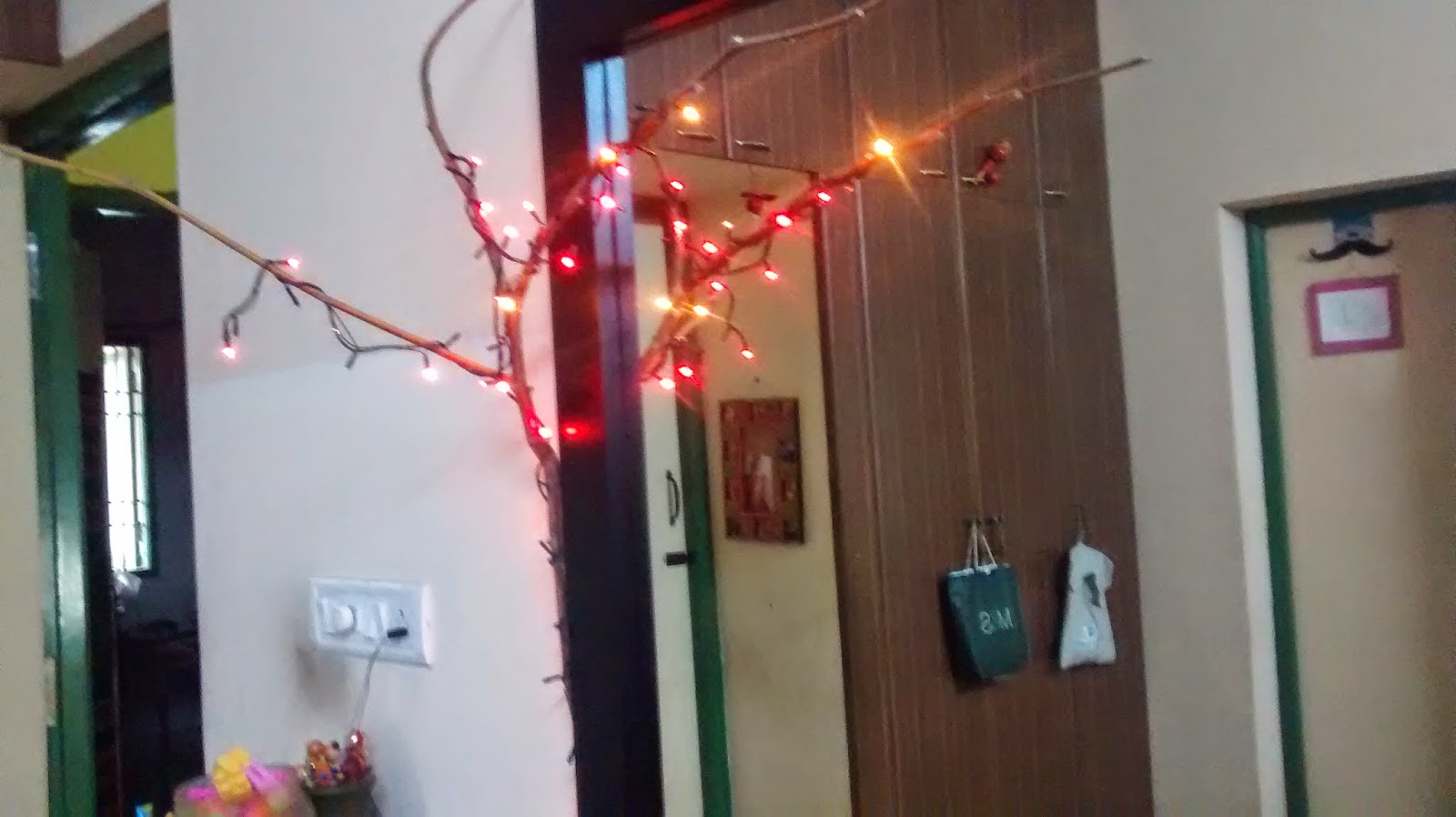
My worded world has pictures too. What do you do when a tree branch from the street falls into your compound? You either discard it or let it into your home. I chose the latter and brought nature indoors in fun, zany ways...


Sunday, September 21, 2014

Amma Inc


A story that appeared in the online edition of to-be-launched mag Swarajya. Read the same on 

http://swarajyamag.com/economy/amma-inc/


The Tamil Nadu Chief Minister has taken brand extension further than anyone in history—from water to salt to canteens. So what if it’s bad economics?


Wednesday, August 13, 2014

The boy-girl divide


The boy-girl divide! 

I recently stopped by the small corner shop in my neighbourhood to buy Kinderjoy for my six-year-old boy. I was mildly surprised when the lady behind the counter asked me if I wanted a treat for boys or girls. What difference did that make, I wondered. Sensing the puzzled look on my face, the lady came out to have a look at my child.

"Okay, you have a boy," she muttered to herself and pulled out 'Kinderjoy for boys', predictably in blue colour. I was aghast. Gender discrimination in treats and candies! I simply could not stomach this. 

I tried hard not to take this too seriously, but the feminist fire in me wouldn't be easily doused. I was keen to know what made the toy inside so special that only boys would like it. It was a top that spun when one blew over it. Did the makers of Kinderjoy think that girls didn't have the strength to make the top spin? I wondered what the candy-pink 'Kinderjoy for girls' pack contained. 

Is there no end to gender-bias? We all do it unwittingly by buying pink for girls and blue for boys. I have two boys, so that means I already have very few options when it comes to clothes. Add to this the colour code I am expected to follow. Forget pink, even shades of red and purple are met with a 'that's for girls' look from my husband. We do not realise, but this bias sort of seeps into our children too. Each time I pick out a pencil box or toy with even a glint of glitter, my older boy screams, "Ewww. That's for girls." 

I am told by my six-year-old that pencil pouches are for girls, while boys must have pencil boxes with a magnetic button. 

Is it really true that girls go after only Barbie dolls and kitchen utensils? I haven't observed or surveyed, but I am pretty sure girls would love to guide cars with snazzy remote control units. And boys can whip up make-believe cake in their own tiny oven... 

It doesn't end there. Right from the toys and clothes and the sports they play (cricket is for boys and girls look good in tennis skirts, right?) to the career choices they make, there is an undrawn line dividing boys and girls. 

I once heard a boy tell his grandmother, when she wouldn't agree to what he had said, "Paati (grandmother in Tamil), please go the kitchen and cook." Everyone around laughed hearing this. It sure sounded cute but the boy probably didn't realise he was hurting the old woman. It is little things like this that build up the chauvinistic world we live in. 

As parents, shouldn't we be more inclusive and all-embracing? After all, the tiny ones pick up their cues from us. 

Read the same post on this online forum